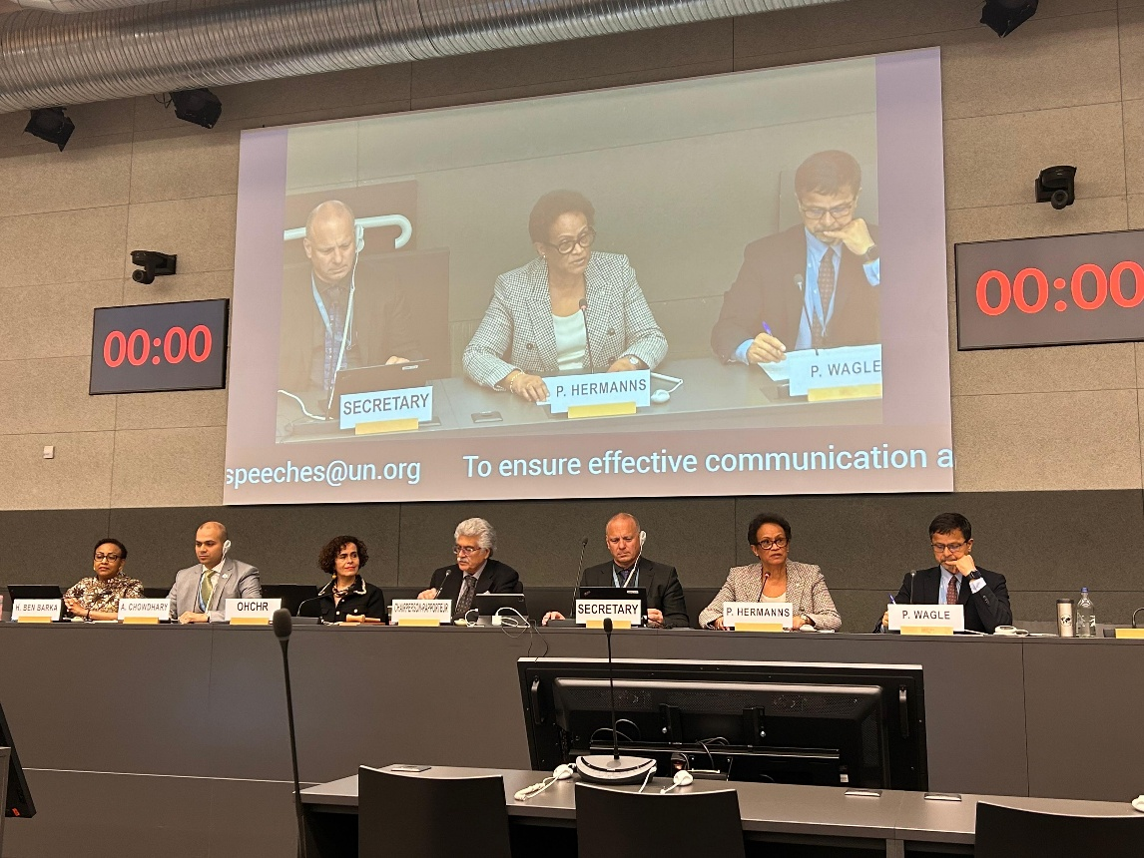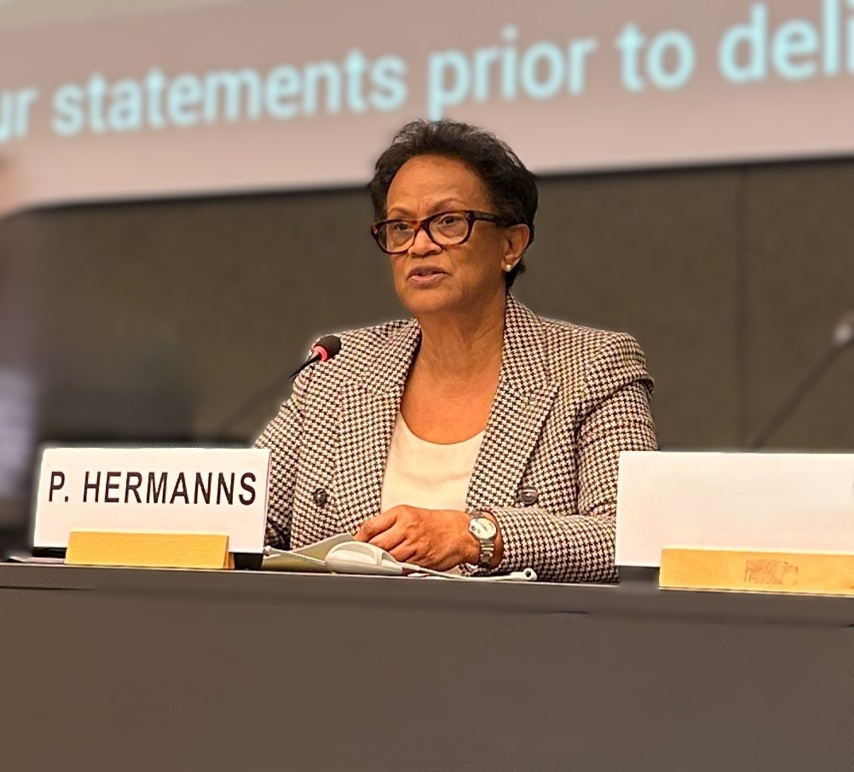
At the 27th Session of the Intergovernmental Working Group on the Right to Development, H.E. Patricia A. Hermanns, Ambassador and Permanent Representative of the Bahamas to the United Nations Office and other International Organizations in Geneva, participated as a panelist addressing Tax-Related Illicit Financial Flows and the Right to Development. In her presentation the Ambassador highlighted the need for a balanced and evidence-based approach to addressing tax-related illicit financial flows (IFFs), firmly grounded in respect for tax sovereignty.
It was further outlined that as a Small Island Developing State (SIDS), The Bahamas operates a tax model that does not rely on income, capital gains, or inheritance taxes which reflects a sovereign policy choice shaped by national realities. Crucially, low-tax or tax-neutral systems should not be equated with non-compliance.
At the same time, Ambassador Hermanns noted that The Bahamas recognizes the serious risks posed by illicit financial flows, including tax evasion, profit shifting, and hidden ownership structures, which can undermine development and human rights. The country’s approach is therefore clear: reject illicit conduct while rejecting unfair assumptions about financial centres.
To this end, Ambassador Hermanns outlined The Bahamas’ sustained commitment to reform. Over the past two decades, the country has strengthened its legal and regulatory framework through measures including:
• The establishment of a Financial Intelligence Unit and robust AML/CFT regimes;
• Asset recovery and unexplained wealth provisions under the Proceeds of Crime Act;
• Economic substance requirements to address profit shifting and shell entities;
• Enhanced beneficial ownership transparency and international cooperation;
• Adoption of global standards, including a domestic minimum tax for large multinational groups.
These reforms demonstrate that compliance must be judged on implementation and effectiveness, not perception.
A key concern raised by Ambassador Hermanns relates to the development impact of reputational assessments. Labels such as “tax haven,” particularly when based on opaque processes influenced by power asymmetries, can negatively affect investment, banking relationships, and the fiscal space of SIDS—ultimately constraining their right to development.
Looking ahead, The Bahamas calls for fair, inclusive, and evidence-based international cooperation. Global efforts to address illicit financial flows must be applied consistently across all jurisdictions and reflect the realities of developing countries. In this regard, Ambassador Hermanns reaffirmed support for a more inclusive, United Nations-led framework for international tax cooperation, ensuring equal participation of all States.
In conclusion, the Ambassador underscored The Bahamas’ central message for the international community:
effectively combating illicit financial flows must go hand in hand with safeguarding sovereignty, ensuring fairness, and advancing the right to development for all.