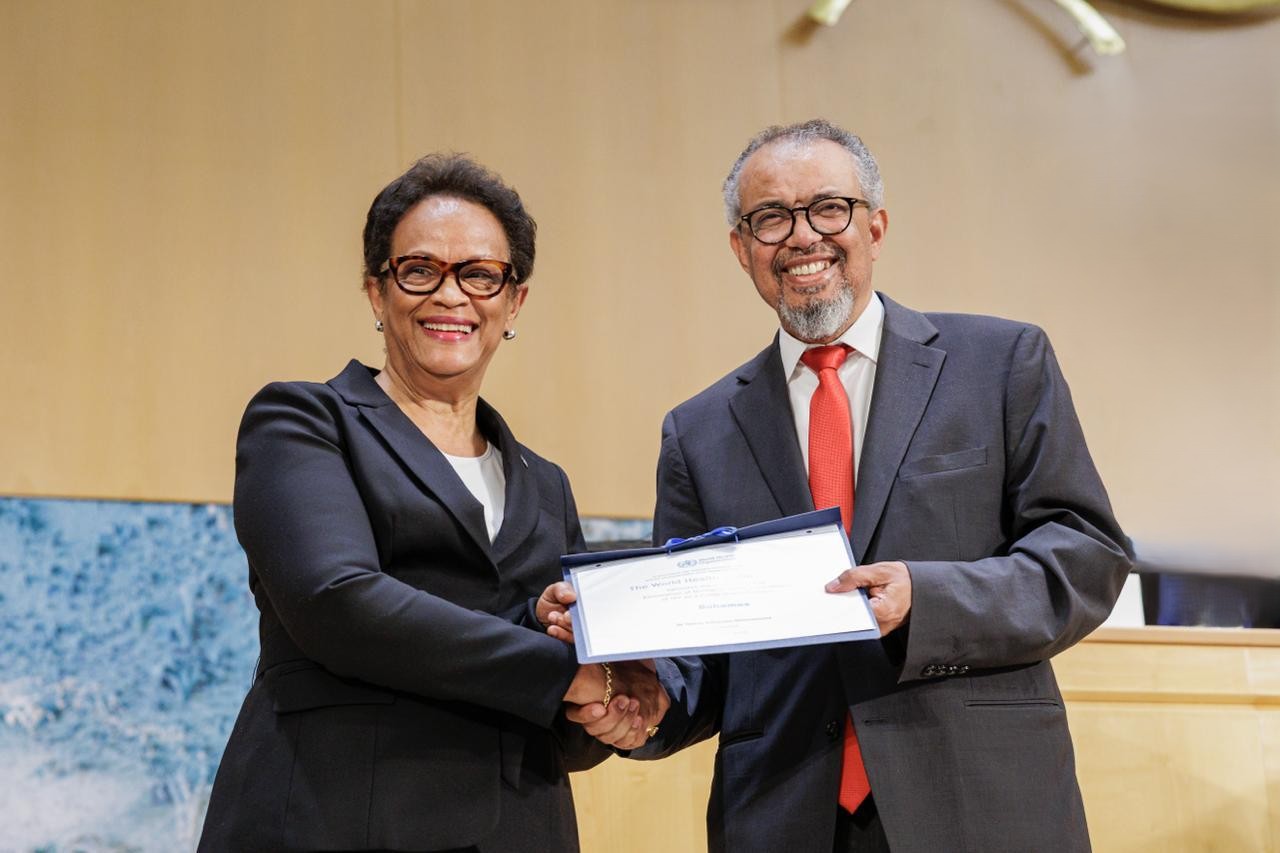
The Permanent Representative of The Bahamas, Her Excellency Patricia A. Hermanns, received on behalf of the Government and people of The Bahamas the World Health Organization (WHO) certification recognizing the country’s achievement in eliminating mother-to-child transmission of HIV. The certification was presented by WHO Director-General Dr. Tedros Adhanom Ghebreyesus during the 79th World Health Assembly in Geneva on 19 May 2026.
The certification marks a significant milestone in The Bahamas’ longstanding national commitment to strengthening public health systems and advancing equitable access to healthcare services. The achievement reflects decades of coordinated efforts by healthcare professionals, policymakers, international partners, and community stakeholders working collectively to prevent the transmission of HIV from mothers to their children.
According to WHO, The Bahamas successfully met the rigorous criteria required for certification, including maintaining very low rates of mother-to-child transmission of HIV and ensuring broad access to testing, treatment, and maternal healthcare services. The recognition places The Bahamas among a select group of countries globally to have attained this important public health milestone.
The accomplishment also underscores the country’s sustained investment in comprehensive antenatal care, early diagnosis, and universal access to antiretroviral treatment. Through strategic public health interventions and strong partnerships with regional and international organizations, The Bahamas has continued to demonstrate leadership in addressing HIV and AIDS within the Caribbean region.
The WHO certification further reflects the dedication of frontline healthcare workers and public health officials who have worked tirelessly to strengthen prevention programmes, improve health education, and reduce stigma associated with HIV. Their efforts have contributed to improved maternal and child health outcomes and reinforced The Bahamas’ commitment to achieving the Sustainable Development Goals, particularly those relating to health and well-being.
Regional organizations, including the Pan Caribbean Partnership against HIV and AIDS (PANCAP), have commended The Bahamas for this landmark achievement, noting that the country’s success serves as an example for the wider Caribbean community. Public health experts have also highlighted the importance of sustained vigilance and continued investment to maintain the gains achieved and prevent new infections.
The Government of The Bahamas continues to prioritize public health initiatives aimed at ensuring accessible, inclusive, and high-quality healthcare services for all citizens and residents. The certification by WHO represents not only a national accomplishment but also a testament to the country’s enduring commitment to protecting future generations and advancing global health objectives.
As The Bahamas celebrates this historic recognition, the country remains committed to strengthening its healthcare systems, supporting vulnerable populations, and collaborating with international partners to promote healthier and more resilient communities.
Additional information on this milestone may be accessed through the World Health Organization official announcement.